Quick answer
Runes are the currency for progression between runs. Runestones are choices that shape an individual run. A skill-tree node may give a permanent benefit, unlock a tower or unit, or add a Runestone to the available pool. Read which kind of purchase you are making before expecting an immediate improvement.
The developer says completed runs award Runes after either victory or defeat, with a larger reward for winning. The progression explanation also describes Runestone families and limited rerolls. Read the official progression explanation.
On this page
1. Skill-tree upgrades: bonuses, unlocks and Runestones
Before spending, finish this sentence: “Buying this will let me…”
If your answer is “receive a stat benefit,” check what the benefit applies to. If it is “use a new tower or unit,” think about the role it would fill. If it is “find a new Runestone,” remember that access to a possible choice is different from receiving that choice now.
This distinction is especially useful when a node appears purchased but the next run looks unchanged. Check the wording before concluding that the purchase failed.
2. Use Time-Lost Techniques as an example
The official Forgotten Powers screenshot shows a Resources-tree node named Time-Lost Techniques. Its description concerns Runestones that increase mine base production at three tiers. The visible purchase is therefore about access to those Runestones; the image does not establish an immediate production increase simply from selecting the node. Inspect the official skill-tree screenshot.
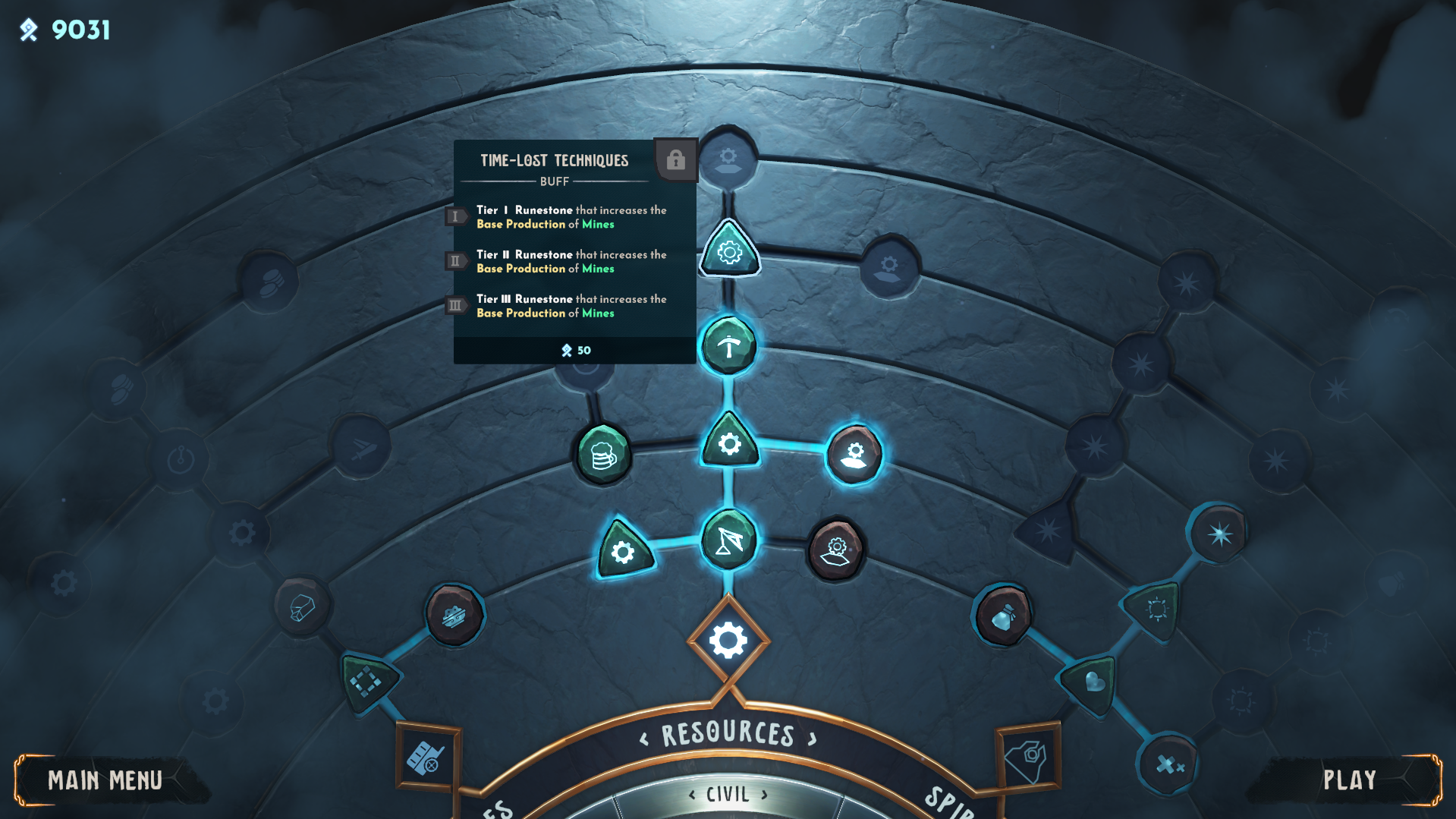
Apply that reading method elsewhere. Look for the object of the upgrade: the building, a statistic, an unlock, or a future Runestone. Similar-looking nodes can lead to different expectations.
3. Choose for the run you have
When offered a Runestone, compare the available effects with your current problem:
- Does this help something already contributing to the run?
- Does it address an immediate weakness?
- Does it require purchases you cannot presently support?
- Would taking it commit you to changing an otherwise workable plan?
A promising effect can be a poor immediate choice if its prerequisites are out of reach. An unremarkable effect may be useful when it improves the part of your defense or economy that is currently limiting progress.
Match a choice to the problem it can solve
Use this table to compare the effects actually offered in your run. It does not assume that a particular named Runestone will appear.
| Current problem | A useful direction to inspect | What would make that choice a poor fit? |
|---|---|---|
| Trench enemies survive an existing firing position | A relevant improvement to the damage or useful coverage already available there | The effect applies to a different tower, or the improved tower still cannot reach the threat. |
| One durable target remains after ordinary enemies are handled | An applicable damage improvement, or support that helps the towers actually attacking that target | More support without enough effective attacks, or an effect intended for a different threat. |
| A needed purchase is blocked by one material | Production benefits that affect the missing resource and buildings you can use | Increasing a material already in surplus, or funding a production project too late to address the current need. |
| Island attacks cost too many units | An effect for the units you are actually committing, considered alongside the attack plan | Paying for unused units or assuming an army upgrade will stop trench leaks. |
| An offered benefit needs a tool you are not using | Its prerequisites and the cost of adding that tool to this run | Choosing it for an urgent problem before the required tower or unit can contribute. |
Recheck the diagnosis after the next engagement. If the same problem remains, the benefit may have been too small, applied to the wrong target, or left the original cause untouched.
4. When to reroll Runestones
The official selection screenshot includes View Map, Reroll and Decline. It shows five rerolls remaining in that pictured situation; it does not prove that every new run starts with five. Inspect the selection screen.
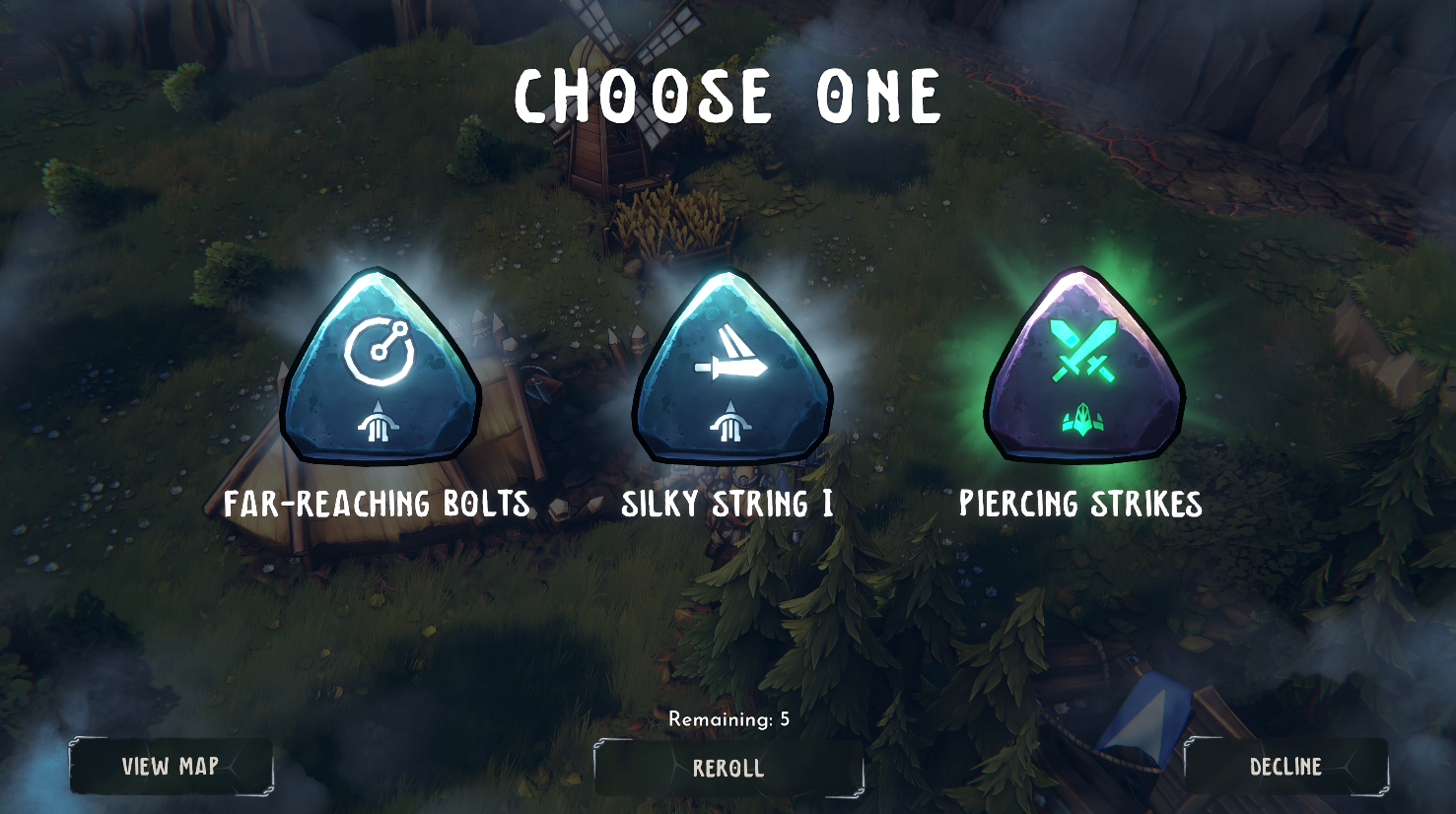
Before rerolling, identify what is wrong with the current choices and what type of effect you are seeking. If you cannot name either, reassess the map and your immediate objective first. A reroll is a chance to improve the offer, not a promise of a particular result.
Keep future uncertainty in mind when spending a limited attempt. An adequate choice now can be reasonable if it preserves flexibility for a later problem.
5. Avoid unsupported rules about the pool
An October player worried that unlocking more Runestones could make preferred choices harder to obtain. The concern is real, but the discussion does not establish equal selection probabilities or prove that avoiding unlocks is always optimal. Read the discussion.
Choose a purchase for a role you understand. If you are uncertain, compare its description with the failure you want to address before committing.
Related: diagnose an early defeat · identify your resource bottleneck.
Source links sit beside the claims they support. These guides distinguish official information from editorial advice. Read our editorial policy.